

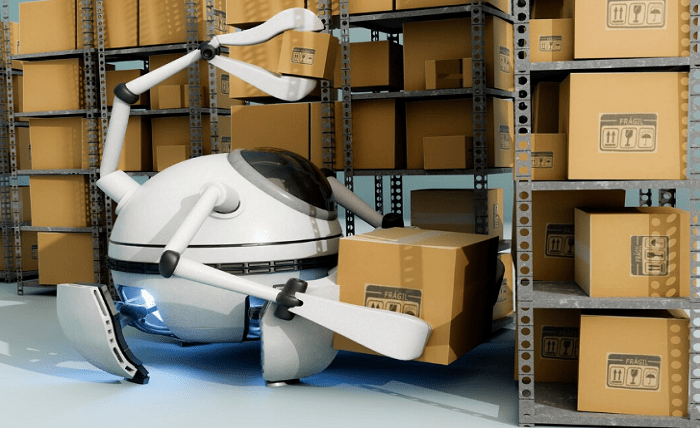
The ever-changing realm of logistics and supply chain management is seeing a significant impact from robots. Today, warehouses are not just storage spaces but hubs of efficiency where every movement matters. Robotics has emerged as a game-changer, revolutionizing traditional warehouse operations and significantly enhancing efficiency. This article delves into the innovations in motion within warehouses, exploring how robotics is reshaping the industry and driving unprecedented levels of efficiency.
The Evolution Of Robotics In Warehousing
Integrating robotics into warehouse operations marks a significant shift from manual labour to automated systems. Initially, warehouse robotics were limited to basic tasks such as palletizing and DE palletizing. More complex robotic solutions are now possible thanks to developments in technology, especially AI and machine learning.
Today, warehouses employ diverse robotics systems, including autonomous mobile robots (AMRs), robotic arms, automated guided vehicles (AGVs), and drones. These robots work seamlessly alongside human workers, augmenting their capabilities and improving overall productivity.
Enhanced Efficiency Through Automation
One of robotics’ primary impacts on warehouse operations is the enhancement of efficiency across various tasks. Robots are adept at performing repetitive and labour-intensive tasks with precision and consistency, significantly reducing the time and resources required for these activities.
For instance, AMRs have advanced navigation systems and sensors to navigate warehouse environments autonomously. They can transport goods between different locations within the facility, optimizing the flow of materials and minimizing idle time. This speeds up the order fulfilment process and reduces the risk of errors and delays.
Similarly, robotic arms are revolutionizing picking and packing in warehouses. Robotic arms ensure accuracy and quality control while speeding up the fulfilment process. They can handle everything from small components to huge packages. By automating these tasks, warehouses can achieve higher throughput rates and meet the growing demands of e-commerce and Omni channel retail.
Furthermore, robotics enables warehouses to operate with greater flexibility and scalability. Unlike traditional conveyor-based systems, which are rigid and require extensive infrastructure, robotic solutions can adapt to changing demand patterns and facility layouts. To succeed in today’s fast-paced corporate world, when being nimble and quick to respond is paramount, this agility is crucial.
Optimizing Space And Resource Utilization
Another significant impact of robotics on warehouse efficiency is the optimization of space and resource utilization. By leveraging robotics solutions, warehouses can maximize the use of available space, minimize inventory holding costs, and reduce the need for excess storage capacity.
For example, AMRs can navigate through narrow aisles and tight spaces, allowing warehouses to efficiently utilize every square foot of storage space. This is especially helpful in city centres, where space is at a premium and real estate is expensive. Furthermore, robots can ensure proper inventory levels and reduce the danger of overstock or stock outs by performing duties like cycle counting and stock replenishment as part of inventory management.
Moreover, robotics enables warehouses to optimize resource allocation by automating energy-intensive processes and reducing waste. For instance, AGVs powered by electric batteries offer a more sustainable alternative to traditional forklifts, reducing carbon emissions and operating costs. Similarly, robotic solutions can optimize energy usage by intelligently scheduling tasks and minimizing idle time, contributing to overall resource efficiency.
The Human-Robot Collaboration
Despite the significant advancements in robotics technology, human workers remain indispensable in warehouse operations. Rather than replacing human labour, robotics complements, and augments human workers’ capabilities, enabling them to focus on higher-value tasks that require creativity, problem-solving, and decision-making skills.
In a collaborative environment, humans and robots work together synergistically, leveraging their respective strengths to achieve common goals. Robots do the heavy lifting and repetitive work, while humans keep an eye on everything, make sure everyone is doing their jobs right, and step in as needed. This human-robot collaboration fosters a culture of continuous improvement and innovation, driving efficiency gains and enhancing the overall productivity of warehouse operations.
Furthermore, robotics opens up new opportunities for workforce development and up skilling. As robots perform routine tasks, human workers can transition to more specialized roles requiring technical expertise, such as robot programming, maintenance, and troubleshooting. This enhances job satisfaction and engagement and future-proofs the workforce against technological disruptions.
Challenges And Considerations
Despite robotics’ numerous benefits in warehouse operations, organizations must address challenges and considerations to maximize their impact. Initial investment is a major hurdle when it comes to integrating robotics technology. Efficiency and productivity have huge payoffs in the long run, but the initial investment can be too much for some businesses, especially SMBs.
The smooth incorporation of robotics into warehouse environments into pre-existing systems and workflows necessitates meticulous planning and coordination. This may involve redesigning facility layouts, reengineering processes, and providing training and support to employees.
Moreover, there are concerns regarding the potential impact of robotics on employment, particularly the displacement of human workers. Although automation has the potential to reshape traditional work functions, it also opens up exciting new avenues for professional growth and advancement. To make sure workers can succeed in a tech-driven job, companies should invest heavily in workforce development and reskilling programs.
Looking Ahead
As technology continues to evolve, the future of robotics in warehouse operations looks promising. Greater automation, efficiency, and production will be made possible by advancements in robotics, artificial intelligence, and machine learning. Warehouse operators will increasingly rely on data-driven insights and predictive analytics to optimize operations and anticipate demand fluctuations.
There will be new opportunities for cooperation and innovation when robotics are integrated with other developing technologies like as block chain, AR, and the Iota. From predictive maintenance and real-time inventory tracking to immersive training experiences, the convergence of these technologies will reshape the future of warehousing.
In conclusion, robotics is driving a paradigm shift in warehouse operations, revolutionizing how goods are stored, retrieved, and distributed. By harnessing the power of robotics, warehouses can achieve unprecedented levels of efficiency, agility, and scalability, positioning them for success in the digital age. Robotics warehouse have transformed traditional operations, enhancing efficiency, agility, and scalability. As organizations continue to embrace robotics and automation, the possibilities for innovation and transformation are endless, paving the way for a more efficient and sustainable future of warehousing.